Voting is the bedrock of any democracy. The United States is the world’s oldest continuous democracy and has long presented itself as a model for democratic governance. Under the Constitution of the United States, every eligible citizen has the right to vote.
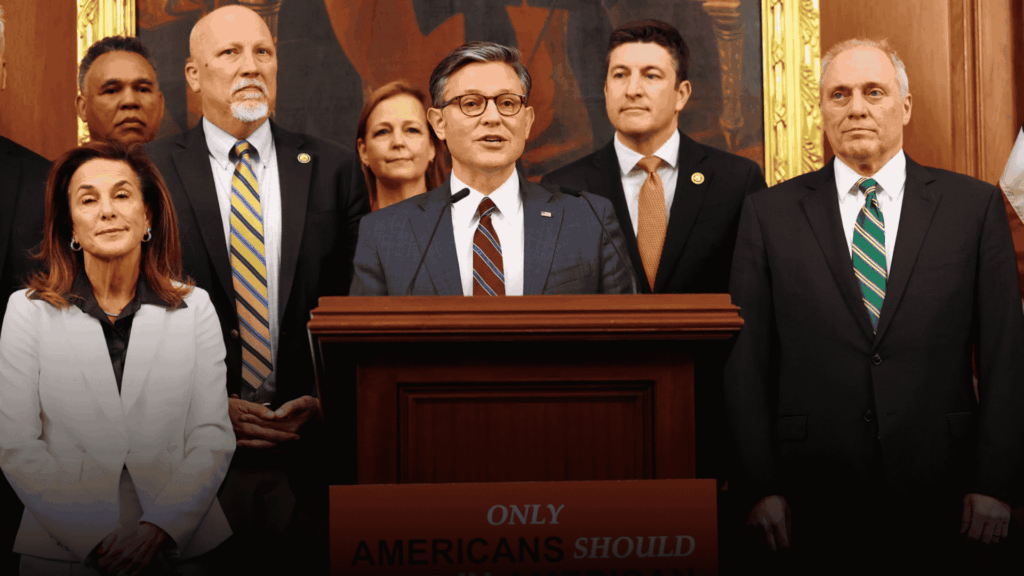
Yet as the nation approaches its 250th anniversary, the Republican Party is attempting to pass legislation that could significantly restrict access to voting in federal elections. Several versions of the legislation have been introduced, including the SAVE Act, the SAVE America Act, and the Make Elections Great Again Act.
The most recent version — the SAVE America Act — has already passed the House of Representatives and is now awaiting consideration in the Senate.
Supporters of the bill argue that it simply requires photo identification and proof of citizenship, a concept they claim enjoys bipartisan support. But the reality is far more complicated. If enacted, the legislation would fundamentally change how Americans register and vote in federal elections.
The bill would also move the country closer to federal control over election procedures, which historically have been administered primarily by the states.
Supporters justify the legislation by claiming that widespread voter fraud exists because non-citizens are voting in federal elections. However, extensive research shows that non-citizen voting is extremely rare.
For example, the conservative Heritage Foundation’s Election Fraud Database, which tracks fraud cases nationwide, shows only a tiny number of substantiated cases over decades of elections. Numerous academic studies and state investigations have reached the same conclusion: non-citizen voting occurs at statistically insignificant levels. Moreover, it is already a federal crime for non-citizens to vote in federal elections.
In other words, the SAVE America Act attempts to solve a problem that research shows barely exists. Instead, critics warn that the bill could create new barriers that disproportionately affect women, minorities, rural voters, students, and elderly Americans.
To understand why, it is important to compare how voting works today with what would change if the SAVE America Act becomes law.
Major Changes From the SAVE America Act
Currently, most Americans register to vote using several convenient options:
- Registering online
- Registering by mail
- Registering at the DMV
- Registering in person
Most states allow voters to verify their identity using a driver’s license number or the last four digits of their Social Security number.
According to election experts, about 94% of Americans register using one of these methods.
If the SAVE America Act passes, many of these widely used methods would change dramatically. Here are ten of the major changes that are coming from if this Bill is passed:
First, voter registration would require in-person proof of citizenship
Under the bill, voters would have to present documentary proof of U.S. citizenship to register for federal elections. This means registering online or by mail would no longer be sufficient unless the voter later appears in person with the required documents.
Second, driver’s license or REAL ID would NOT be enough
Supporters often suggest the bill only requires a photo ID, but that is misleading.
The law would require documentary proof of citizenship, which could include:
- A U.S. passport
- A birth certificate
- Certain naturalization documents
Many commonly used forms of identification would not qualify, including:
- Student IDs
- Hunting or fishing licenses
- Many tribal IDs
- Standard photo identification that does not prove citizenship
Research from the University of Maryland’s Center for Democracy and Civic Engagement estimates that millions of Americans do not have easy access to these citizenship documents.
Third, mail-in voting procedures would become more complicated
The bill could require voters who request absentee ballots to submit documentary identification when requesting the ballot and again when returning it, depending on state implementation.
This could disrupt voting systems in states that rely heavily on mail voting, including:
- Washington
- Oregon
- Colorado
- California
- Nevada
- Utah
- Hawaii
- Vermont
Additionally, states that automatically send ballots to all registered voters could face new restrictions requiring voters to request ballots first, potentially altering the voting systems currently used in several states.
Fourth, election officials could face legal penalties
State and local election officials could face civil lawsuits or criminal penalties if they register someone without properly verifying documentary proof of citizenship — even if the person later turns out to be an eligible voter.
This could create a climate where election workers become overly cautious, potentially rejecting legitimate registrations.
Fifth, rapid implementation could create confusion nationwide
If passed, portions of the law could take effect relatively quickly. A rapid rollout could lead to:
- Confusion among voters
- Administrative chaos for election offices
- Delays in voter registration
- Lower voter participation simply because people are unsure how to comply with the new rules
Sixth, federal access to state voter rolls could increase
The legislation would expand federal involvement in reviewing state voter rolls to verify citizenship status. Critics warn this could increase pressure on states to purge voters based on flawed or incomplete data, something that has happened in previous voter-roll cleanup efforts.
Seventh, additional residency verification requirements
The legislation could require stronger documentation to prove both citizenship and residence, potentially complicating registration for voters who:
- Recently moved
- Have outdated addresses on identification
- Do not have traditional housing documentation
Eighth, more aggressive voter-roll purges
The bill would expand requirements for states to frequently review and update voter rolls, increasing the likelihood that eligible voters could be mistakenly removed if records do not perfectly match federal databases.
Why All This Matters
The debate surrounding the SAVE America Act is not simply about showing a driver’s license at the polls.
Instead, the bill proposes sweeping structural changes to how Americans register and vote in federal elections. Supporters argue these measures are necessary to protect election integrity. Critics warn that the legislation could create new barriers for millions of eligible voters.
As the Senate considers this legislation, Americans should carefully examine what the bill actually does — beyond the talking point that it merely requires photo identification.
Because in reality, the SAVE America Act represents one of the most significant proposed changes to voting procedures in decades.
Conclusion
The debate over the SAVE America Act is not simply about showing a driver’s license at the polls. It represents a major shift in how Americans register and participate in federal elections, with new documentation requirements and procedures that could affect millions of eligible voters. At a time when our nation should be expanding democratic participation, Americans should carefully examine any legislation that could make voting more difficult. An informed electorate is essential to preserving our democracy, and citizens should stay engaged, review the facts, and make their voices heard on policies that affect the fundamental right to vote.
“This article summarizes publicly available research, policy analysis, and reporting regarding the proposed SAVE America Act. Readers are encouraged to review the full legislative text and cited sources for additional context.”