
They Worked And Waited Their Entire Careers
Say it ain’t so. But it is so. The Supreme Court gutted the Voting Rights Act of 1965. Lauded by many as the crown jewel of the Civil Rights Movement, the six conservatives in the majority took a sledgehammer to the Act and rendered it, in the words of Justice Kagan, “all but a dead letter.” The moment is still surreal as I reflect on it.
I grew up with the VRA. It was part of the Black family that shielded our homes from other bad family members like poll taxes and literacy tests. When they gutted it like a fish, I grieved its demise like a real relative. The terrible thing is that we let the enemy into the house that killed it. When enough Black voters cast ballots for Trump or helped sabotage Hillary Clinton in 2016, the days of the VRA were numbered. That one election let Trump seat three justices on the Supreme Court, and those three votes handed the conservatives their majority. Everything that followed flowed from that.
The case that carried out the killing was a Louisiana redistricting fight called Louisiana v. Callais. It grew out of an earlier battle that had forced Louisiana to draw a second Black congressional district. Understand how the trap was built, because the trap is the whole story.
What the Court actually did
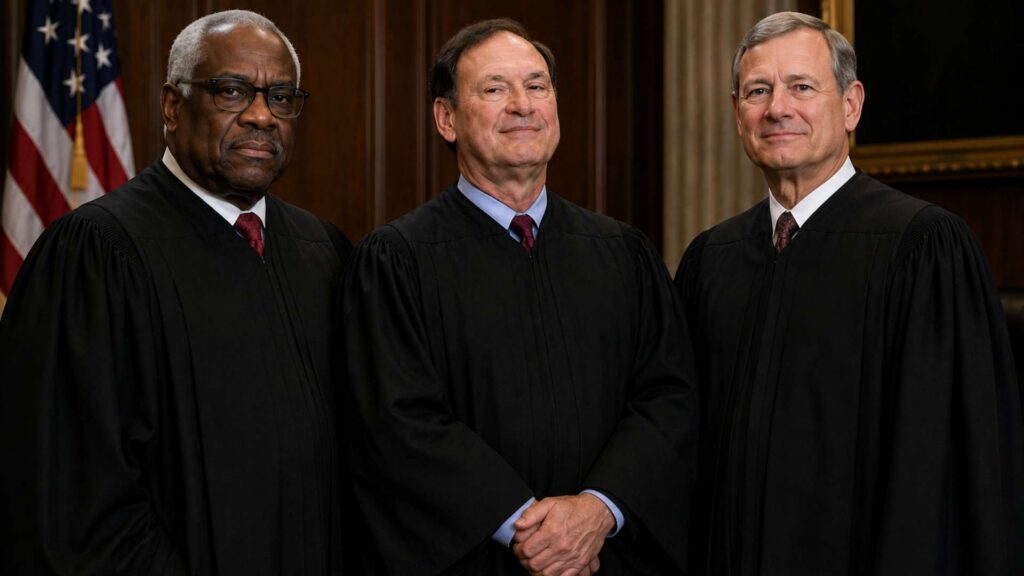
On April 29, 2026, by a vote of 6 to 3, the Court struck down Louisiana’s congressional map. Justice Alito wrote for the majority. He was joined by Chief Justice Roberts and Justices Thomas, Gorsuch, Kavanaugh, and Barrett. On its face the ruling voided a single district. Louisiana’s second majority-Black district, drawn into a map known as SB8, was declared “an unconstitutional racial gerrymander” under the Fourteenth Amendment.
The map was never the real target. For forty years, vote-dilution cases under Section 2 of the VRA ran through a framework the Court set in Thornburg v. Gingles in 1986. Callais rewrote that framework and made three changes that, stacked together, make a Section 2 claim almost impossible to win. First, when plaintiffs offer a sample map to show that a fair district could have been drawn, that map must now satisfy every one of the state’s political goals, including partisan advantage and incumbent protection. Second, plaintiffs may no longer use race as a factor when they draw those sample maps, even though the whole point is to prove that a compact Black-majority district was possible. Third, in weighing the totality of the circumstances, courts must now find present-day intentional racial discrimination in voting. The Court declared that older discrimination and the ongoing effects of societal discrimination count for very little.
Read those three together. Plaintiffs must prove a fair map was possible without drawing for race. They must make that map serve the very partisan aims used to bury Black voters. And they must produce a modern smoking gun of intentional discrimination. That is not a standard. That is a locked door.
The road to Callais
The path shows the cruelty of it. After the 2020 census, Louisiana drew a map with one majority-Black district in a state that is roughly a third Black. A federal court in the Robinson litigation found that map likely violated Section 2 because it diluted Black voting strength. Ordered to comply, the Louisiana legislature drew SB8 with a second majority-Black district. Then a group of non-Black voters sued, calling that second district an unconstitutional racial gerrymander. A three-judge court agreed. The Supreme Court affirmed.
Sit with what that means. The law first told Louisiana it had to create the district to obey the Voting Rights Act. The Court then told Louisiana that creating the district violated the Constitution. Section 2 said draw it. The Fourteenth Amendment, as this Court now reads it, said drawing it is illegal race discrimination. Black voters were marched through a door that the same Court had already bolted shut behind them. That is the two-way door, and it only swings one way.
Kagan saw the pattern
Justice Kagan, in dissent, refused to treat this as one bad map in one state. She called the decision part of a set, and she was right. Understand the strategy, because the strategy is the whole point. They did not kill the Voting Rights Act in a single blow. A single blow would have drawn a single, unmistakable line of blame. Instead they took it apart piece by piece across more than a decade, so that no one ruling ever looked like the fatal one.
Follow the line. In Shelby County v. Holder in 2013, the Court gutted Section 5 and freed the states with the worst records of discrimination from having to clear their voting changes with the federal government first. In Rucho v. Common Cause in 2019, the Court declared that partisan gerrymandering cannot be challenged in federal court at all, handing every state the exact excuse it would later need. In Brnovich v. Democratic National Committee in 2021, the Court weakened Section 2 as a shield against voting restrictions. And now, in Callais in 2026, the Court finishes the job on the last piece standing, Section 2 as a tool against rigged maps. Preclearance in 2013. Partisan cover in 2019. Vote denial in 2021. Vote dilution in 2026. Four cases, one target, one patient hand.
See how the pieces lock together. When Louisiana Republicans stood on the floor this spring and said out loud that they drew the new map for party and not for race, they were not confessing. They were reciting. Rucho told them partisanship is beyond a federal judge’s reach. Callais told them partisanship is a lawful reason to erase a Black district. The excuse and the permission were installed years apart, by the same hand, and this spring they were simply clicked into place. The idea underneath it all, that the Constitution must be blind to race even when race is the wound, was forty years in the making. The demolition just needed the votes, and in 2016 it got them.
The aftermath, which was chaos by design
The Court was not content to decide the law. It moved to control how the law was carried out. By its own rules, the Court waits thirty-two days before sending a judgment down for enforcement. This time it did not wait. On May 4, less than a week after the decision, the Court issued its judgment at once so Louisiana could redraw its map in the middle of an election already underway. Justice Jackson dissented and said the ruling had thrown Louisiana into chaos. She was right. The state suspended its May House primary after more than one hundred thousand voters had already cast early ballots and tens of thousands of absentee ballots were already in. Louisiana moved the House race to November and reopened candidate qualifying in August.
Louisiana went first, because Louisiana had no choice. At the end of May the legislature passed Senate Bill 121, and Governor Landry signed it as Act 2. The new map erases one of the two majority-Black districts and turns a delegation of four Republicans and two Democrats into five and one. A third of Louisiana is Black. Their share of the state’s congressional representation just fell from a third to a sixth. Then came the part that tells you everything. The same plaintiffs who brought Callais turned around and sued again, arguing that the single Black district left standing is itself an illegal racial gerrymander. A federal panel set a hearing for June 17. Before it could be held, the state told the court the new map had to be used for 2026, and the hearing was called off. So this November, Louisiana votes under the very map its Black citizens spent two decades fighting to prevent. The deeper challenge waits for 2028.
Then the dominoes fell across the rest of the South. Florida passed a new map the same day Callais came down, targeting four Democratic incumbents and reaching for as many as four Republican seats. Governor DeSantis is now arguing that Florida’s own Fair Districts amendments, which the state’s voters wrote into their constitution in 2010 to ban partisan gerrymanders, are themselves invalid in light of Callais. Tennessee carved up the majority-Black, Democratic-held Ninth District anchored in Memphis, the only such seat in the state, and set a new primary for August. Mississippi moved toward the majority-Black district held by Congressman Bennie Thompson. South Carolina’s own Republicans killed their redistricting bill as the June primaries began, and Georgia will redraw, though not in time for this November. Lawsuits trail every one of these maps.
Watch Alabama, because Alabama is where the mask came all the way off. In Callais, Justice Alito wrote that intentional racial discrimination in voting is still unconstitutional, and he said the ruling had no bearing on Alabama. He could say that because in 2023 a federal court had found that Alabama lawmakers intentionally diluted Black votes, and the state had been forced to use a fair map with two Black-majority districts. After Callais, Alabama tried to bring the old map back. A three-judge panel, two of them appointed by Trump, looked again and refused. They wrote that they could not make Alabamians vote under a plan tainted by intentional race-based discrimination. On June 2, 2026, the Supreme Court overrode that panel, six to three, and let Alabama use the discriminatory map for this year’s elections anyway. Sit with the sequence. In April the Court promised that intentional discrimination still counts. Five weeks later it blessed a map that two courts had found intentionally discriminatory. The promise was not worth the paper it was printed on.
Add it up. Nine states have redrawn their congressional maps since last year. Analysts now estimate that the full exercise could hand Republicans as many as seventeen House seats and Democrats as many as six, with the honest range for the net Republican advantage running from about five seats to more than a dozen. The heaviest weight of the Southern redraws will not land until 2028. A strong Democratic year in November could wash out part of it. None of that undoes the harm to representation, because these maps are not built for a single election. They are built to last.
What it really means
Scholars are already using plain words for this. Researchers describe Callais as the potential end of multiracial democracy in the South and the return of the one-party South that ruled the region before 1965. The damage does not stop at Black voters. The Voting Rights Act built Latino and Asian American political power too, in states far beyond the old Confederacy. The new rule of the road is brutally simple. Unless a legislature stands up and openly announces that it is redrawing districts to harm Black, Latino, or Asian voters, its map will likely survive. No one announces it. So the maps will stand.
The loss will cut deepest where most people never look. Roughly two thirds of Section 2 cases are fought not over Congress but over city councils, county commissions, and school boards. Those are the rooms where everyday power actually reaches our children, our neighborhoods, and our schools. The mayor of Birmingham said it plainly after the Alabama ruling. The bigger damage will be local. That is the ground where our fight has to be won too, and it is the ground I know best.
Where we go from here
Section 2 was not formally repealed. As a practical weapon in court, though, it is on life support. The fight now moves to ground the Court cannot fully control. State constitutions still ban partisan gerrymandering in places like Florida, and state courts are already filling with these cases. Congress still holds the power to restore what the Court took, if voters send it people willing to act. And the ballot box remains the one arena where numbers, not doctrine, decide.
I grieved the VRA like a relative because it was one. But we do not honor the dead only with tears. We honor them by finishing their work. The generation that won the Voting Rights Act did not have the Voting Rights Act when they started. They had feet, faith, and each other. So do we.
So hear me clearly, and hear me the way I mean it. What they tore down can be rebuilt, and it will be. It may take a season. It may take a decade. It may take longer than my lifetime and yours. We will restore it anyway. No court order is permanent, no majority is forever, and no verse in this story is the last one until we say it is. Our people have always turned a shut door into a doorway and a defeat into a down payment on the next victory. They gutted the Voting Rights Act. We will build it back, and we will build it back stronger than they ever found it. However long it takes, however many elections it takes, however many of us have to carry it and hand it on, we will restore it. Let justice roll down like waters, and let us be the flood.